AlgorithmX
A Hebrew learning tool for nine graph algorithms, with step-by-step playback, visible data structures, and side-by-side comparisons.
memorisedwatched
The problem
I was learning graph algorithms from lecture slides where the interesting part - the order things happen in - is exactly what a static diagram cannot show.
Overview
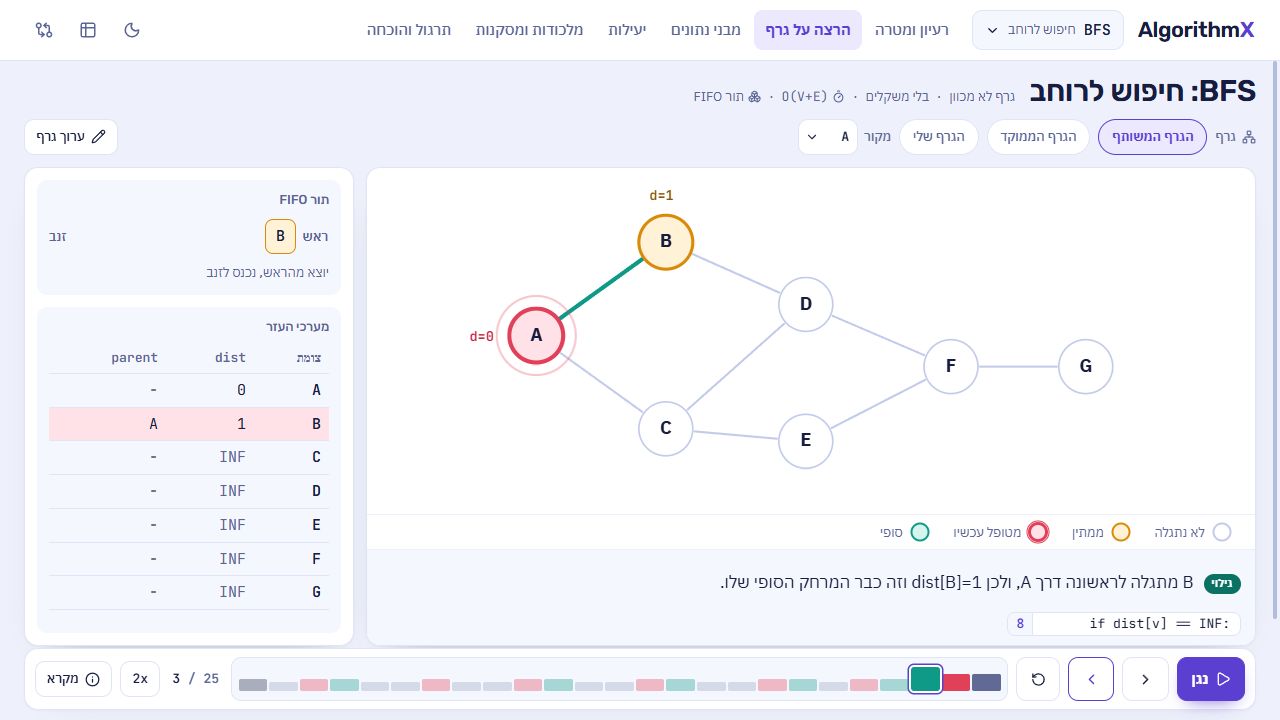
An interactive Hebrew learning site that turns graph algorithms from something you memorise into something you watch happen. Every step colours the node and the edge that changed and says in one sentence what just happened and why. Step forward, step back, or drag along a timeline where each mark is coloured by what the algorithm did there.
The data structures fill up alongside the graph - queue, stack, priority queue, distance array, Union-Find groups, flow table - and two algorithms can run side by side on the same graph, which is the fastest way to see why Dijkstra and Bellman-Ford disagree. Every algorithm is a pure function returning the full list of steps, so nothing is animated by hand and what you watch is what actually ran.
What it does
- 01Nine algorithms: BFS, DFS, Dijkstra, Bellman-Ford, Floyd-Warshall, Prim, Kruskal, Ford-Fulkerson, Edmonds-Karp
- 02Step timeline coloured by event type, draggable through time
- 03Four prepared comparisons, each teaching one specific difference
- 04Warns when an algorithm is the wrong tool, then runs it anyway if you insist
- 05Build, save and share your own graphs
- 06Pitfalls, exam tips and practice questions per algorithm
Screens